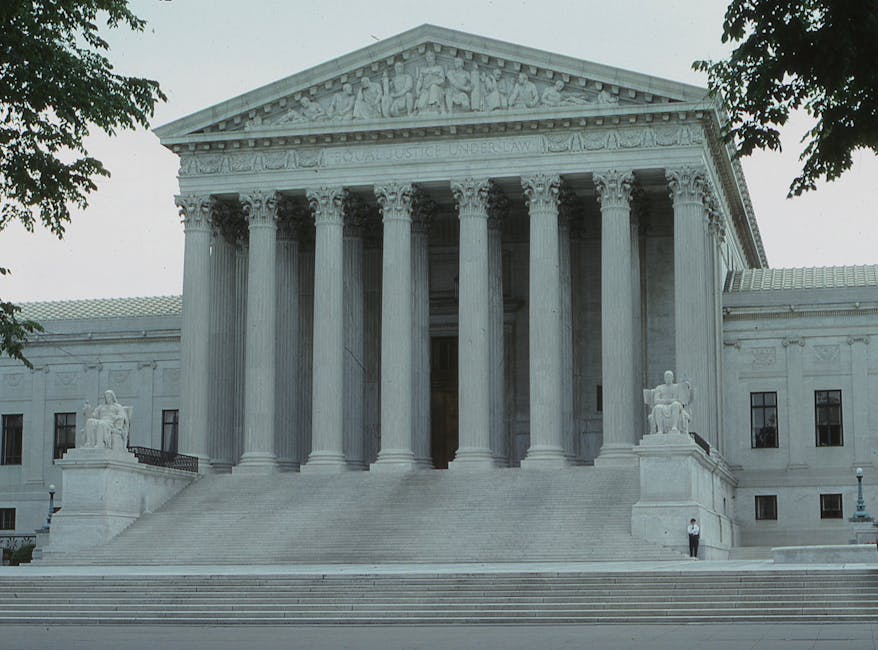
The Supreme Court is poised to deliver a landmark ruling in 2026 that could fundamentally alter how the federal government conducts digital surveillance on American citizens. Legal experts predict this decision will either solidify the government’s expansive digital monitoring capabilities or restore significant constitutional protections that have eroded over the past two decades.
The case, *Digital Privacy Coalition v. Department of Homeland Security*, centers on whether bulk metadata collection from social media platforms, search engines, and messaging apps violates the Fourth Amendment’s protection against unreasonable searches. With over 4.8 billion digital communications analyzed daily by federal agencies, the stakes couldn’t be higher for both national security operations and individual privacy rights.
The Case That Could Change Everything
The lawsuit originated in 2024 when privacy advocates discovered that the Department of Homeland Security was collecting massive amounts of data from major tech companies without individual warrants. Documents leaked by a former NSA contractor revealed that agencies were monitoring the digital footprints of over 280 million Americans, including their search histories, location data, and private messages.
What’s Actually Being Challenged
The government’s current surveillance framework operates under three main authorities. First, the Foreign Intelligence Surveillance Act (FISA) allows monitoring of communications involving foreign entities. Second, Executive Order 12333 permits intelligence agencies to collect data on Americans’ international communications. Third, various national security letters enable the FBI to demand user data from tech companies without court approval.
Privacy advocates argue these powers have expanded far beyond their original scope. Jennifer Martinez, lead attorney for the Digital Privacy Coalition, points to specific examples: “We have evidence that DHS flagged 40,000 Americans as potential security threats simply because they used certain search terms or visited specific websites. This isn’t targeted surveillance—it’s mass monitoring.”
The government maintains that bulk collection is essential for preventing terrorist attacks and cyber threats. Deputy Attorney General Robert Chen testified that this surveillance helped prevent 23 planned attacks in 2024 alone, including a foiled bombing attempt at Chicago O’Hare Airport.
Tech Companies Caught in the Middle
Major technology companies find themselves in an impossible position. Meta, Google, and Apple collectively received over 350,000 government data requests in 2024, representing a 45% increase from the previous year. These companies face legal penalties for refusing requests and public backlash for complying with them.
Apple CEO Tim Cook testified before Congress in late 2024 that his company spent $2.3 billion on legal compliance and privacy infrastructure to handle government requests while protecting user data. “We’re essentially building two separate systems—one that protects our users’ privacy and another that satisfies government surveillance demands,” Cook explained.
Potential Outcomes and Their Implications
Supreme Court watchers identify three likely scenarios for the 2026 ruling, each with dramatically different consequences for American digital privacy.
Scenario One: Government Powers Upheld
If the Court rules in favor of the government, federal agencies would gain explicit constitutional approval for their current surveillance practices. This would likely accelerate the expansion of monitoring programs, with experts predicting the creation of a comprehensive “digital ID” system by 2027.
Under this scenario, the Department of Homeland Security could legally require social media companies to provide real-time access to user communications. The FBI’s proposed “National Digital Monitoring Center” would become operational, creating a centralized database of American citizens’ online activities.
Privacy advocates warn this outcome could drive Americans toward encrypted communication platforms and privacy-focused technologies. Signal, the encrypted messaging app, reported that downloads increased 340% in countries with extensive government surveillance programs.
Scenario Two: Mixed Ruling with New Restrictions
A more likely outcome involves the Court upholding some surveillance powers while imposing new constitutional limits. Legal scholars expect the justices to require individual warrants for accessing private communications while allowing bulk collection of public social media posts and search queries.
This middle-ground approach would force Congress to rewrite major surveillance laws by the end of 2026. The Intelligence Committee is already drafting legislation that would create a special court system to approve digital surveillance requests within 48 hours.
Technology companies would face new compliance requirements under this scenario. The proposed Digital Privacy Protection Act would require platforms to notify users when their data is shared with government agencies, except in cases involving immediate national security threats.
Scenario Three: Sweeping Privacy Protections
The least likely but most impactful outcome would see the Court striking down most current surveillance authorities as unconstitutional. This would require federal agencies to obtain individual warrants before accessing any American’s digital communications, similar to requirements for physical searches.
Such a ruling would effectively shut down programs like the NSA’s XKeyscore database, which currently stores internet communications from millions of Americans. Intelligence agencies would need to rebuild their entire digital monitoring infrastructure around targeted, warrant-based investigations.

What This Means for Regular Americans
Regardless of how the Court rules, 2026 will mark a turning point in digital privacy rights. Americans should expect significant changes in how their online activities are monitored and protected.
Immediate Practical Impacts
Citizens can expect new transparency requirements from tech companies. Starting in late 2026, major platforms will likely publish detailed “surveillance reports” showing how often they share user data with government agencies. Facebook’s preliminary report indicates the company shared data on 2.3 million American users with federal agencies in 2024.
Banking and financial services will also see major changes. The Treasury Department’s Financial Crimes Enforcement Network currently monitors all transactions over $3,000, but a pro-privacy ruling could require individualized suspicious activity reports instead of blanket monitoring.
Long-term Consequences for Society
The ruling will shape American society’s relationship with digital technology for decades. A pro-surveillance decision could normalize comprehensive government monitoring, while strong privacy protections might encourage innovation in encryption and privacy technologies.
Educational institutions are already adapting to this changing landscape. Stanford Law School launched a “Digital Rights Clinic” in 2024, and dozens of law schools now offer specialized courses in privacy law and surveillance technology.
Preparing for the Post-Ruling World
The Supreme Court’s decision will likely come in June 2026, giving Americans and institutions several months to prepare for the new reality of digital privacy rights.
Citizens concerned about privacy should consider adopting encrypted communication tools and reviewing their social media privacy settings. However, experts caution against assuming any technology provides complete protection from government surveillance.
Businesses, particularly those handling sensitive customer data, should begin developing compliance strategies for both possible outcomes. Companies that collect user data may need to implement new consent mechanisms or data retention policies depending on the Court’s ruling.
The 2026 digital privacy ruling represents more than a legal decision—it’s a fundamental choice about what kind of society America wants to be in the digital age. Whether the Court prioritizes security or privacy, the decision will reshape the relationship between citizens, technology companies, and government surveillance for generations to come.